Archive: Press and News

Cancel
  • © Fraunhofer ISIT

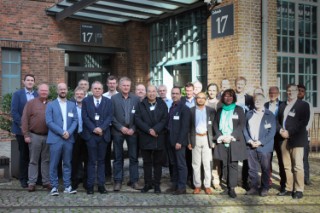
    The pilot line for “Advanced Packaging and Heterogeneous Integration for Electronic Components and Systems” (APECS) marks a major leap forward in strengthening Europe’s semiconductor manufacturing capabilities and chiplet innovation as part of the EU Chips Act. By providing large industry players, SMEs, and start-ups with a facilitated access to cutting-edge technology, the APECS pilot line will establish a strong foundation for resilient and robust European semiconductor supply chains. Within APECS, the institutes collaborating in the Research Fab Microelectronics Germany (FMD) will work closely with European partners, to make a significant contribution to the European Union´s goals of increasing technological resilience, strengthening cross-border collaboration and enhancing its global competitiveness in semiconductor technologies. APECS is co-funded by the Chips Joint Undertaking and national funding authorities of Austria, Belgium, Finland, France, Germany, Greece, Portugal, Spain, through the “Chips for Europe” initiative. The overall funding for APECS amounts to € 730 million over 4.5 years.

    more info
  • © Fraunhofer ENAS

    On November 5, 2024, the Chamber of Commerce and Industry (IHK) Chemnitz awarded Fraunhofer ENAS the distinction of “exemplary vocational training organization,” honoring the institute’s long-standing commitment to training highly specialized young talent for the semiconductor industry.

    more info
  • © R-Tech GmbH

    The Fraunhofer Institute for Electronic Nano Systems ENAS in Chemnitz was joined today by guests from government and industry in celebrating the opening of its new “Innovation Office” at the “TechBase” innovation and start-up center in Regensburg, Germany. The move creates ideal conditions for the institute to expand its top-quality research services to include the south of Germany and develop forward-looking technologies in immediate proximity to customers and partners throughout the region.

    more info
  • © Fraunhofer ENAS

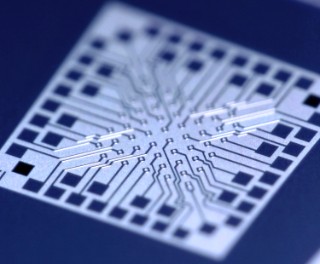
    Working in collaboration with the universities in Chemnitz, Paderborn and Bochum, a German research team from Fraunhofer ENAS has succeeded in developing an innovative sensor concept that operates independently of external power sources and generates the energy it needs by itself. The miniaturized, compact sensor technology creates the conditions to monitor industry, building and transportation infrastructures continuously and with long-term stability and to optimize maintenance cycles. The unique combination of a piezoelectric element and a memristor enables shocks and vibrations to be detected and potential risks to be uncovered at an early stage. This allows both failure times and downtimes to be minimized and unnecessary costs to be avoided.

    more info
  • © Klinikum Chemnitz gGmbH

    Cancer remains one of the most common causes of death worldwide. The World Health Organization (WHO) predicts that the number of cancer cases could rise rapidly by more than 70 percent annually between now and 2050. Early diagnosis and appropriate, individualized treatment are crucial to increasing the chances of recovery for affected patients. In Chemnitz, progress is being made towards this goal through a close cooperation between medical technology research and clinical application: Fraunhofer ENAS and the Klinikum Chemnitz gGmbH will work together to significantly speed up the early detection of cancer with the help of artificial intelligence (AI), thus keeping surgical interventions to a minimum going forward.

    more info
  • © Ines Escherich / Fraunhofer ENAS

    Fraunhofer ENAS is part of the new project “HaloFreeEtch” (“Novel approaches for halogen-free and sustainable etching of silicon and glass”) that started in September 2024. This groundbreaking project, coordinated by the University of Technology Chemnitz, will run for 48 months with a total funding of € 3.997.735 provided by the European Union. Together with six international partners, Fraunhofer ENAS will raise the production of future semiconductors to the next level using innovative and smart etching processes.

    more info
  • © Fraunhofer ENAS / Juergen Loesel

    “Cold winters with heavy frosts, hot summer days reaching 40 °C or more or heavy rainfall – extreme temperatures and moisture can have dramatic consequences for electronic components and modules, leading to defects and the early failure of entire systems,” explains Kerstin Kreyßig from Fraunhofer ENAS. As an expert in reliability tests, she knows how to use heat and cold effectively in order to put electronic and microelectronic assemblies through their paces and detect defects at an early stage. In this interview, the engineer explains how thermal and climatic stress tests provide added value for customers from industry and research and how an underground laboratory plays its part.

    more info
  • For everyday work or vacations, cars – fast, flexible, and convenient – are still one of the most popular means of transport to get where you are going. But what if an electronic or safety-related component fails due to wear, material fatigue, or signs of aging? The vehicle breaks down on the road and, instead of an idyllic vacation resort, your next destination is a garage. If a spare part has to be ordered, it may take several days before the damage can be repaired and the journey can continue. How can such unexpected situations be more effectively and, above all, proactively calculated or even avoided, thereby improving road safety? Scientists and industry partners have examined the trustworthiness and reliability of electronics in the “Trust-E” project. In this interview, Dr. Jan Albrecht, head of the “Component Reliability” group and subproject manager of the “Trust-E” project at Fraunhofer ENAS, explains what answers research can provide to this question.

    more info
  • Fraunhofer ENAS and the Center for Micro and Nano Technologies (ZfM) at Chemnitz University of Technology welcome two microtechnology trainees as new employees after the successful completion of their three-year training period. The two research and development partners are not only linked by a long-standing cooperation in many successful joint research projects. The Chemnitz institutions also work together closely in the training of junior scientists, thus creating optimal learning conditions for gaining practical experience.

    more info